|
![]() |
|
|
![]() |
|
| The International Magazine for Spiritual Consciousness | Issue #2 | contents | print article | email this page |
|
W
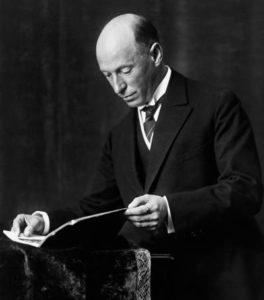
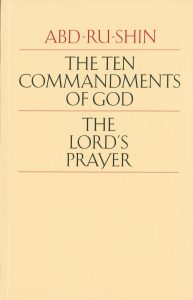
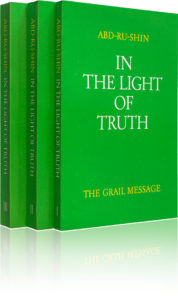
e r n e r H u e m e r OBLITERATE ALL TRACE Against the background of the tragic events of the Inquisition, it is easy to understand why the poets of the Middle Ages were only too eager to obliterate all traces which might point to the Cathars and their knowledge. They chose to free the legendary material from the "stench of the pagan" -- to "catholicize" it in a way -- through the emphasis of Christian elements, making it more attractive to the Church of Rome. If Wolfram von Eschenbach had really received the secret wisdom of the Orient that he wove into his "Parzival" legend from a master of the Cathars, he would have been forced to conceal every trace that would link his informant to the Cathars, in order to protect him from prosecution and the judgment of the Roman Inquisition. Therefore, it is logical to assume that Kyot may be a pseudonym for a Cathar who preserved the age-old wisdoms of the Oriental tradition. According to another opinion, Wolfram von Eschenbach is supposed to have belonged to the Order of Templars. The primary aim of the Templars, a spiritual order of knights founded in 1119 and subject only to the Pope (1139), was to protect the Holy Grave in Jerusalem by fighting against the nonbelievers. They named themselves after the residence of their current Grand-master in the place in Jerusalem where Solomon's Temple once had stood. The Templars had the best imaginable relations with the Orient; many of their Grand-masters counted Arabian nobility among their friends. Thus, the two cultural circles, Christian and Islamic, fertilized each other, and a spiritual exchange took place-an exchange for which the Templars were later reproached. BACK TO WOLFRAM VON ESCHENBACH Whether von Eschenbach himself belonged to the Templars, or whether his "Master Kyot" was merely a pseudonym for a Cathar, all researchers agree with each other on one main point: the Orient mediated the knowledge of the Grail to the Occident. But how were the tidings made known to the Arabs? Wolfgang von Eschenbach wrote that Flegetanis was "selected from the family of Solomon, born of the people of Israel." Otto Rahn considers in his work, Crusade Against the Grail, the question of whether the saga might originate from the famous Solomon treasure, which had fallen into Arab hands in Toledo, in the year 711, after they had decisively conquered the West-Goths and begun to take over Spain. Had Solomon known about the Grail at that time, or himself received the revelation? Or does this secret knowledge go even further back, perhaps as far as Moses? In the Middle Ages, due, in large part, to von Eschenbach's work "Parzival," the concept of the Grail became public property, at just the time when the Church was making every effort to leave no trace of the Cathars and their cultural shrine, to finally stamp out everything that stood against the dogma of Rome. INTERPRETATIONS OF THE POST-MIDDLE AGES Von Eschenbach's "Parzival," the great epic poem of the Middle Ages, triggered a flood of free renderings. The Grail motif became familiar and inflamed the fantasy of many Western poets. Everyone who treated the material added something of himself and his culture, thus further confusing the legend and watering down, even distorting, the Truth as it was handed down through the generations. Reworkings of the story went so far as to claim that Adam received the Grail in Paradise. Chased out of the Garden of Eden, though, he was forced to leave it behind. According to legend, Adam's son Seth supposedly received permission to fetch the wondrous goblet and look after it until the Grail could finally be placed into the hands of the Son of God. But the fascination with the Grail went even beyond poetic fantasy. People everywhere were determined to locate the Grail, which most thought was a bowl or vessel of green coloring. For instance, some believed that a precious bowl from the St. Laurence Church in Genoa, Italy was the Grail. In the year 1247, the Patriarch of Jerusalem presented King Henry III with a bowl decorated with emeralds, which was meant to have come from Nikodemus and Joseph of Arimathia. For many years, the story of the Grail was a celebrated and popular subject for writers, until the end of the 15th century, when the tradition faded into nothing more than an ancient legend. Still, in the following era, a few free renderings surfaced, such as 18th century Swiss scholar Johann Jakob Bodmer's "Parvical," written in the year 1753. The most thrilling rearrangement of the Grail material, however, occurred in the 19th century, when Richard Wagner, the poet-composer, created "Lohengrin" in the years 1845 to 1848. Wolfram von Eschenbach had previously related the story of Lohengrin and Elsa von Brabant at the end of his epic poem "Parzival." This narrative served as Wagner's model for his own "Lohengrin." Especially noticeable in this work is the Grail story. In it, much of the old tidings of the Grail receive new life. Wagner writes about the Grail Castle, the home of Lohengrin, In distant land unreachable by your steps Richard Wagner, one of the leading artistic personalities of the 19th century, was fascinated by the poetry of the Middle Ages and especially the legend of the Grail. Already in one of his first great works, the first performance of Tannhauser in 1845, he let Wolfgang von Eschenbach appear. Five years later, "Lohengrin" premiered, telling the story of a Grail knight who comes from the Grail Castle to help the Truth to fight for a victory. The Grail legend was now in a dramatic new form: it was the story of Parsifal, King of the Grail, who gains knowledge and "becomes knowing" through compassion, finally bringing redemption. And yet, Richard Wagner still could not forget the legend of the Grail, even after the completion of his "Lohengrin." And so, through him, came the most important new interpretation of the Grail legend. As Wagner himself portrays it, he had a decisive encounter with the Parsifal material on the morning of Good Friday in 1857. While under a strong influence, there immediately arose in Wagner's mind a solemn melody, which later became "Good Friday Magin" in his "Parsifal." But the outline for his own "Parsifal-drama" did not ripen until the year 1865. Twelve years later, on January 25 1877, Richard Wagner created the stage inauguration festival piece which was to form the final work of his creative prowess. On that day he wrote, "I am beginning 'Parsifal' and I am not letting up until it is ready." In the first act, Wagner wrote about the Grail, which he connected with the bowl of the Lord's Supper, You know, that it is granted only to the pure to join up with those brothers, who for the highest works of salvation strengthen the holy magical powers of the Grail In "Parsifal," Richard Wagner placed the suffering of the ailing King of the Grail, Amfortas, in the centre of the action. Ever since a sinful transgression, which connected him with the darkness, Amfortas suffered from an open wound that would not heal. Every new unveiling of the Grail, and every outpouring of power in connection with it, brings a renewal of his suffering. Under great inner turmoil, Amfortas decides that he can no longer fulfill his duty as King of the Grial due to the unbearable agony associated with the unveiling of the Grail. Eventually, he is rescued from his painful prison by the heroic knight Parsifal. At first, Parsifal is ignorant of his task to save Amfortas and spends his time roaming around the world, finally arriving in the magical kingdom of Klingsor. Here, he is beguiled by alluring flower maidens and is captivated by the siren-like Kundry. When she seductively kisses him, Parsifal awakens from his ignorant stupor. He recognizes the cause of Amfortas's illness, feels the latter's wound now burning in himself, and pushes Kundry away from him. When the temptress calls her master, Klingsor, for help, Parsifal steps up to duel him in personal combat. In the midst of intense fighting, Parsifal acquires possession of Klingsor's spear, which originally belonged to the knighthood. With the sign of the cross, Parsifal depletes Klingsor of his magical powers, and immediately his magical kingdom disintegrates. Finally, Parsifal heals Amfortas's wound and as a result becomes the new King of the Grail. Through Richard Wagner's musical masterpiece, the Parsifal saga experienced its most lively rebirth since the time of Wolfram von Eschenbach. Wagner's musical skill fully portrays the internal and external progress of the action, profiles the characters, and illuminates the situations with incredible clarity. The premiere of "Parsifal," Wagner's last work, took place on July 26, 1882 in the Festival House in Bayreuth. The public at the premiere must have been unusually deeply moved. After the conclusion of the performance, the theatre-director August Forster from Leipzig, proclaimed to some of his acquaintances, with tears in his eyes, "You will see, Wagner is going to die!" He believed that with the achievement of "Parsifal," Wagner's life works were completed. Indeed, Richard Wagner's health soon began to decline rapidly. The poet-composer died on February 13, 1883 in Venice. His "departing-this-life-work," as "Parsifal" was later called, completely reformed the legendary material from the Middle Ages. Wagner concentrated the fullness of the legend that had been handed down over the centuries into a plot of three acts. Like a skilled surgeon, Wagner surveyed an enormous multitude of details and recounted events, divested them from an excess of fantasy-filled, ornate, and periodic accessories, and dynamically displayed the remaining core narrative. Also worthy of note is the time period in which Wagner's "Parsifal" took shape: On April 18, 1875, Abd-ru-shin was born; he would later write In the Light of Truth: The Grail Message. This work published in the 1920s, was the first to truly elucidate the high Truth that actually forms the basis of the legend of the Holy Grail. THE "SEARCH FOR THEGRAIL" MISUSED The search for the Grail, the leading motif of poetry from the Middle Ages and of Wagner's later operatic work, symbolizes a human longing; it is as far from esoteric as it is romantic, as little Middle Ages as it is mystic, religious, or modern. Rather, it is timeless and unconditional, and has something to do with that which is eternal and what differentiates the human being from his fellow creatures on Earth. However, this spiritual longing can be misdirected, often with disastrous results, as demonstrated by many spiritual and worldly examples that range from harmless fantasies to, in the recent past, terrifying extremes of gross and grave consequences. The most horrifying example involves a demagogue and power-mad despot who harnessed the longing in the hearts of men and manipulated them to accept his aims: Adolph Hitler. His use of the profusion of Grail material, which through the tradition of the "Artus romantic" -- including Richard Wagner's Grail operas -- occupied a high rank in the spiritual life and consciousness of Germany, was, in more than one sense, Luciferian. With conscious aim, he effectively interwove his own propaganda and ideology with the Grail myth, transforming it into a vastly different myth of diabolical themes. Richard Wagner's operatic works, too, were engulfed in Hitler's clutches. With skewed interpretations, he formed the "Parsifal" plot, including the Grail, into the service of his own vision of "pure blood" and "spoiled civilization." SUFFERING UNDER THE REGIME It was during this conflicted time that Abd-ru-shin (Oskar Ernst Bernhardt, 1875-1941) published the lectures of his Grail Message, In the Light of Truth, between 1923-1937. In March of 1938, immediately after the annexation of Austria, the centre of Abd-ru-shin's activity, he was arrested by the Gestapo. His property was confiscated and he himself, after suffering months of imprisonment in Innsbruck, was deported, along with his family. The stock of published works of Abd-ru-shin was confiscated and the sale of his books was prohibited. Furthermore, Abd-ru-shin was forbidden to continue writing his Grail Message. In the distant Kipsdorf (Erzgebireg), Abd-ru-shin found a place of refuge, but he remained subject to close observation by the Gestapo. He, who had wanted to help in the face of mankind's need, suffered unspeakably under these measures. He died on December 6, 1941, during the fateful days of the turning point of the war. And thus ended the last and greatest tidings of the Grail. |
|
| print article | email this page | send us a comment | |
![]() |