Have a Grail World account?     Log In

Death – the End or a Gateway into a New Existence?

Near-death experience
Issue Number: 
12

Werner Huemer


What happens when we die? Do we live on after death and if so – how? Can we find answers to this pivotal question of life? In the new GrailWorld series “I have experienced death!” people relate their near-death experiences, and also researchers with many years of interest in the events at the end of our life on earth. An encouraging overall picture develops, which lifts a considerable part of the mysterious veil that surrounds death.


“PERPLEXED AND LONELY, a soul stands in the chamber of death! Perplexed because the human being lying on the death-bed refused while on earth to believe in the continuity of life after the death of the physical body! He had therefore never seriously considered the matter and ridiculed all who spoke of it.


“Confused, he looks around! He sees himself lying on his death-bed, sees people he knows standing about weeping, hears the words they speak, and senses their grief as they lament his passing. He would like to laugh and call out that he is still alive! He does so, but is surprised to observe that they do not hear him. He calls again and again, louder and ever louder. The people do not hear it, but go on lamenting. Fear begins to arise within him, for he himself hears his own voice quite clearly, and is also distinctly aware of his own body.


“Again he calls out in anguish, but nobody pays any attention to him! Weeping, they gaze upon his lifeless body, which he recognises as his own yet suddenly regards as something strange that is no longer part of him, for he now stands beside it in a body free from all the pain he had suffered up till then!


“Now he lovingly calls the name of his wife who is kneeling beside the death-bed, but her weeping does not cease and there is no word or movement to show that she has heard him. In desperation he walks up to her and shakes her shoulder vigorously. She does not notice it. He does not know that he is only touching and shaking the ethereal body of his wife, not the physical one, and that the woman, who like him never gave a thought to the existence of anything beyond the physical body, therefore cannot feel his touch upon her ethereal body.


“An unspeakable feeling of dread makes him shudder! A feeling of being utterly forsaken makes him so weak that he sinks to the floor and loses consciousness!”


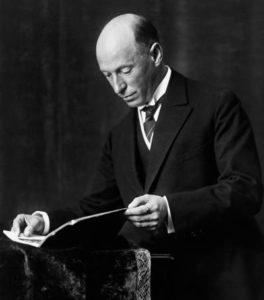
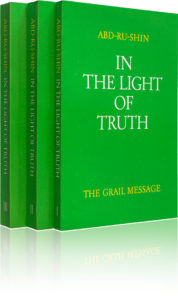
AROUND 75 YEARS AGO, when Abd- ru-shin published the lecture “Departed this life” in his work “In the Light of Truth – The Grail Message”, from which this quote comes, materialist minded contemporaries may have turned up their noses sceptically at such accounts. What do we really know of dying or even life after death? All that seems mere speculation!


Naturally we can still observe similar reactions today, because our view of the world is far from having departed from materialism in recent generations. One thing, however, has changed fundamentally: talk about death is no longer placed under quite such a radical taboo. For about 30 years, a research field (thanatology) has dealt with experiences at the end of our life. Authors like Dr. Raymond Moody and Dr. Elisabeth Kuebler-Ross have become known worldwide through publications that summarised so-called near-death experiences. Such accounts come about if someone were to return once again from the threshold of death into physical life. An example of such an experience is our interview with Bianca Scheibner “It is not yet time – go!” It is estimated that 50 million people worldwide have had such near-death experiences.


The beginning of research into dying

In many cases, the questioning of such patients had begun quite unspectacularly. The accounts of the persons affected were recorded and evaluated – and turned out to be astonishing, because with death, evidently every person goes through definite stages, all the same whether he is a man or woman, and regardless of religion, education and also age. Even with little children, it could be ascertained that dying follows the same “timetable” as with adults. With these researches, the accounts in the book “In the Light of Truth” were also impressively confirmed, because the out-of-body experience described is actually one of the pivotal, repeatedly described events at the passing of a human being.


Further pivotal experiences at the threshold of death are termed a life review and a tunnel experience – Bianca Scheibner also reports of it. According to the research findings, it can hardly be doubted that the majority of people pass through definite stages at the end of their life.


Is everything merely an illusion?

There is great uncertainty concerning the question how we should interpret these accounts. There are only few scientists who accept the innumerable documented near-death experiences as evidence for life after death. The established expert opinion points more toward the assumption that a certain programme influences our brain, which – as a protection mechanism in extreme situations – simulates such experiences.

This view naturally results from today’s prevailing material world view, according to which impersonal processes of the brain add up to a person and nothing higher, non-material exists. But this opinion is open to question. In the second part of this series we will focus – among other things – on research results which lead to the conclusion that our consciousness can apparently still exist without the body and that out-of-body experiences are thus real events – and not mere illusions.


What happens after death?

If consciousness is actually something non-physical, then our life can go on after death. But how does it continue?


Near-death accounts are mostly of an overwhelming light experience. On the other hand there are also numerous accounts of the other side with mention of extremely unpleas- ant experiences, which, however, serve the further spiritual development of the one concerned. How does this fit? What is life on the other side really like? We will likewise seek answers to these questions within the framework of this series – even if in so doing we must assume one thing: Whether it concerns the account of a near-death experience or a manifesta- tion from the other side, these are always the most subjective experiences, which must not be generalised, even if they appear quite plausible.


True, we human beings strive for objectivity, professionalism, academic soundness – but that which is close to life always remains subjective and unique. And oddly enough: in hardly any other circumstances are we so close to life and so far from the trivialities of everyday life as we are in the face of death.