Have a Grail World account?     Log In

Eating Disorders: A modern epidemic

Issue Number: 
14


Corinna Hübener


For some time now, a constant stream of reports about young girls and women with eating disorders vie for our attention. It is hard to compre-hend – but amongst us live hundreds of thousands of people, for whom daily food intake represents a real ordeal. At first, it was mostly celebrities or models who were reported to be suffering from the dangerous diseases of anorexia nervosa or bulimia nervosa, but now it is the pretty schoolgirl, the successful student or the charming neighbour who are following in the footsteps of their “idols”. What lies behind these eating disorders – and what can we do?

An insidious, dangerous disease

In Great Britain it is estimated that more than a million young girls have eating disorders, and a wide-ranging public campaign aims to encourage those affected to seek help and, at the same time, enlighten parents. At issue is an insidious disease that must be taken seriously: according to statistics, 10 to 15% of the sufferers die from the effects of anorexia.

Although emaciated almost to a skeleton, those afflicted by anorexia have a fixation about being too fat. They develop a distorted body image and compulsive behaviour. The parents of these young girls often hope that the dysfunctional behaviour is a mood caused by puberty and will settle down again, even if in the meantime the weight loss has already reached alarming proportions and physical collapse is imminent. However, the vicious circle of anorexia can usually only be broken if help is sought at the earliest possible time. Only very seldom does someone succeed in freeing oneself from it alone. Yet even professional help does not always lead to the desired success.

Classical psychiatry still often assumes that a disturbed family rela- tionship is the underlying cause when a family member suffers from eating disorders. This does not need to be the case, however, although the family is naturally an important relationship structure, in which all members influ- ence one another in a reciprocal way and outward influences have to be assimilated. Therefore the question of guilt frequently arises. So if financial problems, the miscreant little brother, or lack of attention were the causes of the abnormal behaviour of young girls (and sometimes young men!), then the social phenomenon of “eating disor- ders” should have manifested long before the 21st century?

“I felt strong, because I could say No!“

Asked what importance role models have for people with eating disorders, the manager of a psychosomatic clinic replied: “A lot. The key problem is that the self-esteem of the women affected is almost exclusively dependent upon their figure, their weight and their ability to keep their eating habits under control. They want to emulate the successful, slim and beautiful models as these are portrayed in the media.” Predominantly it is young girls in puberty who fall for the seductions of a “barbie-doll image”. And in so much as society hardly allows children to be children anymore and the media, to a significant extent, mould the everyday lives of adolescents in most cases, those who succumb to eating disor- ders are getting younger and younger. Sufferers have a very pervasive feeling of their own inadequacy. Studies and experience also show that often the parents and grandparents of those afflicted have previously suffered from the most varied obsessions or diseases, for example depression, or even at the other extreme – so-called “binge-eating disorder”, in which large amounts of food are consumed in order to compensate for impulsive behaviour and inner emptiness by external pleasure. In the US today, for example, one out of three suffers from obesity as a consequence of excessive consumption of predominantly processed foodstuffs. Anorexic pepole on the other hand do not seek satisfaction in sensible enjoyment, but look for something totally different. Lena, a young woman who had suffered from anorexia for two years before she went public, was asked how this addicting habit could be so attractive, as it had never left her a moment of happiness. She answered: “Because it gives you the feeling of being strong. I was strong because I could say no to every meal. No matter how great my hunger was. You descend into this maelstrom and suddenly you cannot get out of it any more.”1

Thus anorexics begin to develop feelings of guilt if they give in to the natural need for food, instead of remaining firm. “It’s in my head and it just does not go away”, an anorexic I know repeatedly said to me.

Susie Orbach, psychotherapist and writer on eating disorders, formu- lates that anorexia, by its very nature, is a type of defence against the admis- sion of an inner emptiness, an attempt to deny its existence instead of filling it by seeking to make a new and different connection to the world through achievement which results in self-esteem.

According to my own observations, all anorexia sufferers can be distin- guished by a singular trait: they are not really weak, even if many of them lack self-esteem, but absolutely energetic and assertive. Indeed, most are exceptionally ambitious and successful graduates, students and athletes.

An eerie stealth hunger

Bulimia is the most commonly occurring form of eating disorder. Unlike anorexia, it does not inevitably lead to dangerous illnesses, but those affected lead an inconspicuous “normal” life. Basically, it is a yearning for food, because bulimics mostly consume large amounts of foods to satisfy their “inner hunger”, their “unsated yearning”. To prevent them from becoming fat, however, they vomit the ingested mass of food; and as with anorexia, this develops a momentum of its own.

Gundis Zambo, a successful television presenter and long-term sufferer, with no one being aware of it, acknowledges what lies behind this disturbing behaviour. She strove for perfection and tried hard to “function” in all areas of life – profes- sionally, as a spouse, housewife and mother: “I sensed that I lived accord- ing to false values, strove for things which outwardly looked impressive, but which could not give me the inner gratification for which I so longed. I realised that I did not nourish myself, and not only my body, but also my soul would suffer lasting damage if I did not dramatically alter my attitude towards myself as a person.”

Necessary pressure balance

Yet what does “towards myself” actually mean? What is our self? Why is it that human beings with a pronounced self-esteem, who are firmly anchored in a natural and simple way of life, tend not to become addicted so readily or do not permit themselves to be influenced so much by outward impressions?

Dr. Richard Steinpach aptly explained this in his essay “The Pressure Balance”, starting with the following premise: “The man of today, more than ever before, is exposed to a host of external impressions. Our high-bred achievement- oriented society makes extreme professional demands on those who want to get ahead or just want to maintain their position. (...) According to the Law of Balance, this outer pressure demands a corresponding counter-pressure from within. (...) He must always counter the environment with his own personality, which is rooted in the spirit, in order to be able to prevail in it.”

Dr Steinpach then clarifies that the term “spiritual” does not refer to the intellect and thus not to brain activity, but our human core of being. “The spirit speaks to us through the intuition, which then enables us to find the connection to our higher, true purpose of existence. Through this connecting strand, the spiritual interior can be “filled-up”, as it were. The person who has lost this connec- tion therefore suffers from an ‘inner emptiness’ – a very appropriate term. (...) The essential spiritual counter- pressure is lacking in the majority of human beings. They thereby become ‘imbalanced’, a word which in its deepest meaning signifies nothing other than the lack of balance between outer and inner pressure. (...) What does this necessary balance consist of? What generates the inner counter-pressure? Since man’s inner- most core is spiritual, it follows that the pressure must also be of spiritual nature. The activity in the outer world – work as well as leisure time activities – has to be counteracted by spiritual vitality”. This means, “to take into account the meaning of life in thought, volition and deed and correspondingly to arrange in accor- dance with these higher connections that which streams towards us in our everyday lives. As a consequence of this connection, the spiritual core within us is strengthened, it becomes active, animated and begins to resonate. (...) This power stemming from the spiritual protects us from suffering the fate of a rock in the surf, which the water progressively robs of its form until it is finally ground into sand. This danger of levelling, stereo- typing, thus loss of individuality, has become much greater than ever before through the enforced alignment of numerous facets of life. (...) The person who has already become too weak to develop the necessary counter-pressure by himself or herself, seeks support in the collective and thereby runs the risk of sacrificing his or her individuality. Unfold- ing spiritual power, however, can only be accomplished individually and starting from our innermost. No-one else can do this for us. After all, the ability to develop into a unique personality by fulfilling one’s poten- tial, is the very essence of man”

The hunger strike as a means of self-assertion should therefore be substituted by something uplifting and fortifying that gives young people self-esteem, without the need for a “perfect body” or even the “strength of being able to starve”.

Unfortunately, the development of emotional powers, which can help the spiritual counter-pressure to unfold to counteract the pressure from outside, is mostly not encouraged in schools. On top of this, girls and women are socially expected to fulfil many roles at the same time. A female doctor for instance, whose case is known to me, suffered from anorexia for years as a young woman and then found her way back to a normal life, studied medicine, married and had three children. After decades, the disease appears to have erupted again. The trigger may well have been the increased pressure of work caused by the manifold burden of her dual role as a mother and doctor. If, under such circumstances, the spiritual counter- pressure cannot be maintained, the person becomes exposed to strong emotional fluctuations and, conse- quently, seeks refuge in something which supposedly gives support.

Anorexia and shame

If we assume that we are spiritual – and spirit is a real nature, the one thing within us that is truly living; (the body being simply a shell for the spirit) – then we need spiritual power in order to nourish and develop our spiritual core. We receive this power from sources that originate from higher levels of Creation. We can draw from these sources if we lead an appropriate life, which is committed to higher ideals and adheres to the fine stirrings of intuition. Unfortunately, however, it is especially noticeable with girls who suffer from eating disorders, that the tender, feminine aspects are pushed into the background and that they also lack the sense of shame, which protects the personality.

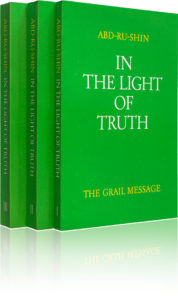
Earlier generations were still aware of the fact that – as Abd-ru-shin expresses in his work “In the Light of Truth” – with discarding the outward sense of shame, the inner, spiritual person is also devalued. The more the feeling of shame is developed, the more spiritual the person is. Today, we have totally forgotten such truths. The finer intuitive sense of womanhood, which could serve as a yardstick and guide for society, has been suppressed under the guise of “progress”.

Seek medical help quickly!

There is no prescribing finer percep- tions and a spiritually oriented life for a person. It is, however, possible and important in the case of eating disor- ders in general, and with anorexia in particular, to seek medical help immediately. The rule is: the sooner the disturbance is acknowledged as such and the more co-operative the person concerned is, the better the chances of success are. In any case, admission into a clinic will interrupt the progression and consolidation of the disease. An essential contribution to the convalescence of an anorexia sufferer I know was that within the framework of a school project, she completed a long-term practical training in a health food shop. Thereby, upbuilding powers were released within her and she became receptive to spiritual currents. After all, this must always be the ultimate goal: to prepare the soil for the reception of spiritual energy from the higher planes of Creation. For this gives us the zest and courage for life, which, in turn, can relieve the scourge of inner disharmony and conflict afflicting many people today – not just the young.