Phenomenon of Memory Transplant
Werner Huemer
Claire Sylvia received a heart and lung transplant. Like most organ recipients, she does not know the donor of the organs. But following the transplantation she feels that she has changed in some strange way. Sometimes she has the feeling that “someone else” is in her, that her previous “self-awareness” is overlaid by an “additional presence”. Some time after surgery she dreams of a boy named Tim, to whom she feels connected in love. It turns later that her organ donor was actually called Tim and that he died in a motorcycle accident. When a friend picks her up one evening on a motor- cycle and they ride at high speed across the countryside, a feeling of happiness streams through her.
In 1998 Claire Sylvia was one of the first to publicly expound such experi- ences. These experiences form the basis of the autobiographical book entitled “A Change of Heart”, which she co-wrote with William Novak.
Subsequently many more cases have been documented, in which following heart transplant patients went through striking changes in their feelings and behaviour after their operation that were then recognised by the relatives of the donor as being personal traits of the deceased donor. For example, an 18-year-old organ recipient named Danielle developed a marked enthusiasm for music, learned to play the guitar and began to sing as well. The donor heart came from an 18-year-old boy, who had been a musician and had written poetry. A boy who received the heart of a toddler who drowned in a bathtub suddenly developed an irrational fear of water after the operation. Another boy, Carter, who at the age of 7 months received the heart of 16- month-old Jerry, all of a sudden started to emulate the behaviour patterns of the deceased toddler. Jerry’s mother described her first meeting with Carter: “When he hugged me, I could feel my son. I mean I really could feel him. I felt his energy. Carter uttered the same baby- talk words that Jerry had said and was playing with my nose just like Jerry used to do.” The young organ recipi- ent also developed a particular attrac- tion to Jerry's parents and even called them “Mother” and “Daddy“.
As mentioned before: Such accounts are not simply strange isolated cases. The American cardiol- ogist Dr. Paul Pearsall interviewed more than 100 heart transplant recip- ients, who are convinced that they sense a connection with the deceased donor. He also checked their state- ments by questioning acquaintances, friends and relatives of the donor about his or her personality traits.
The results of Dr. Pearsall’s research, published in the Spring 2002 issue of the Journal of Near-Death Studies and also in the book “The Heart’s Code” (1999), revealed something astounding: following surgery, more than 10 percent of the heart recipients exhibited up to five noticeable parallels to the life of the organ donor. Today, this phenomenon is often called “transplanted memories”; the term might go back to a 2003 television documentary on the subject on the “Discovery Channel”.
The “eerie phenomenon”, so called because of the inexplicable, intangible connections that come to light, may apparently affect not only heart recipients. There is, for example, the case of a 47-year-old liver transplant patient. After the operation he suddenly developed an intense fondness for classical music, which he used to hate previously. It turned out that the organ he received had come from a young violinist ...
Such sensational descriptions may possibly just be extreme examples of a general problem that is currently a taboo subject within the profession, the fact that the ensuing post-opera- tive psychological conflicts are very much part and parcel of such interven- tions. In her excellent book “The Lifeless Patient” (2004), Anna Bergmann summarised the situation as follows: “Transplantation medicine has created a new type of patient with unique psychological conflicts. Between 50 to 70 percent of all recipi- ents of vital organs (heart, liver, kidneys, pancreas, lung) suffer from personality changes, identity conflicts, anxiety and depression. Originating in the US, a new branch of psychiatry has developed in order to deal with these special problems – ‘Organ Transplantation Psychiatry (OTP)’. In the first two weeks following the operation delusions may manifest in organ recipients, which are then followed by depression, psychoses and even suicidal tendencies. It is likely a large number of cases go unreported after an organ transplanta- tion, since many of these transplant patients are wary of having their taboo-laden conflicts made public!”
Taking the summarised problems into consideration, including feelings of guilt towards the organ donor (“survivor guilt”), irrational reconcil- iation needs, feelings of being possessed or death fantasies, we come to the conclusion that the vast major- ity of organ recipients sense some form of connection with the donor – or, rather, suffer under this connec- tion, because most of the behavioural problems that surface are extremely stressful and undermine the previous identity of the patients.
What is actually transferred?
The big question remains: What really happens? What is actually transferred with the organ of the donor?
Because this question reaches deeply into the invisible aspects of our human nature, there is no definite answer from science or medicine, at best only vague assumptions. In any case, the phenomena described overturn the modus operandi of transplantation medicine, working on the premise that the individual parts of the human body are as exchange- able as the broken parts of a machine. In fact, it shows – once again – that man is very obviously much more than the sum of his body parts.
Some researchers approach the phenomenon of memory transplanta- tion on the psychological level, and explain that a person also derives his identity from an intact body unit: “As a result of a dissected body, a divided self also arises: a sinister alien power threatens to overrun the personality of the patient. This power is then countered by communication, negotiation or outright hostility”, we read in Anna Bergmann’s book.
The incorporation of a foreign organ reminds many people - consciously or unconsciously – of an act of cannibalism and they associate the rejection of “alien flesh”, which is introduced into their bodies with the organ, with the natural rejection by the body, which must of course be suppressed with drugs on a daily basis to ensure survival. In this way an ongoing psychological conflict can emerge. That notwithstanding, it is also “a fact, which is not normally talked about, that many essential drugs can cause psychotic side- effects.” writes Elisabeth Wellendorf in her contribution “Psychological Aspects of Organ Transplantation” to the book “Dying To Order” (1997).
Therefore it is no longer a secret that such radical surgical procedures as is the case with organ transplanta- tions also have serious psychological consequences for the patient. Just as little can we question the reality that organ recipients frequently experi- ence, to a greater or lesser extent, a connection with the organ donor in some shape or form.
How does this connection come about?
The big question as to what is transferred with the organ of the donor still remains unresolved.
Do cells have a memory?
In the meantime medical science has established that processes within the body are not necessarily tied to certain places or organs inside it, as has long been assumed. Some effects can, as startling experiments have shown, be proved to even transcend the body itself.
Thus, for example, the heart is a strong generator of electromagnetic energy. It radiates so much energy that a small bulb can be powered with it. Also the amazing magnetic field generated by the heart can be detected with sensitive magnetome- ters as far away as a distance of 30 metres from the body. So it is quite conceivable that information to every organ and every part of the body can be transported with the energy from the heart.
Moreover, it has recently been demonstrated that a line of communication exists between the heart and the brain that goes far beyond the nerve connections we are so familiar with. Certain neuro- transmitters, which are chemical substances necessary for brain function, were found in both the brain and in the heart. In addition, hormones and brain cells have been discovered throughout the body.
So there are clear indications that certain personality traits that were previously associated exclusively with brain activity are actually tranmitted to and stored in other body cells. Therefore, as an explana- tion for this phenomenon, science has put forward the theory of cellular memory. This stipulates that every organ of the body, and especially the heart as the “engine room” bears within it whatever “lies in the heart” of the person concerned, thus what belongs to his personality. Therefore, when an organ is transplanted to another person, “memories” would also be transferred to the recipient along with the organ.
Scientists of a materialistic orienta- tion may perhaps be satisfied with this attempt at explaining the phenomenon of “memory transplantation". But it is and remains speculative. This is because it basically assumes that the personality - our emotional inner soul, our mind, our consciousness, the spirit - can be explained by brain and body functions alone. However, there is no credible evidence to support this assumption.
What if we understand the real person as a spiritual being that is only joined to or held fast in a physical body? What if our consciousness does not originate in the brain, but is the result of non-material processes?
Today this assumption is no longer a groundless hypothesis or purely a question of faith. Ever since near- death researchers, such as the Dutch cardiologist Pim van Lommel for example, have ascertained beyond doubt in their studies that human consciousness can exist outside the body, the hitherto accepted concept of human personality and of the human core of being, of the self, is in dire need of revision.
A “spiritual occupation” from the beyond? Let us therefore assume that the real human being is not the physical body, but an immaterial spirit, and for the sake of simplicity let us refer to it with the generally familiar concept of the soul.
This soul leaves its body shell in the course of explantation, the body then dies. Is it possible that by transferring an organ from this dying body a connection is formed between the departed soul and the organ recipient and continues to exist?
Some authors say yes to this question. In esoteric and fringe scien- tific circles the theory of a “spiritual occupation” is put forward. In essence, this concept expresses what was formerly understood as “posses- sion”: a person feels taken over or occupied by another consciousness – and this description fits really well with many of those accounts that are now referred to as examples of “memory transplantation”.
If we proceed from a non-material soul, which leaves the body at death and lives on in an otherworldly realm, then it is of course conceivable that this soul may seek in many cases a connection to the earthly world. In the case of Claire Sylvia, which was described at the beginning of this article, it appeared that Tim – the boy from whom she had received the heart –, wanted to introduce the organ recipient to his former family. She writes: “I believe that Tim led me to find his family, to be in touch with them again, and perhaps to resolve, or complete, that which was unresolved while he lived. I feel this strongly in my heart.”
Another stunning case, which also suggests a contact from the beyond, was of a ten-year-old girl who received the heart of a murdered eight-year-old girl. Following the surgery, the recipient needed psychi- atric treatment after being persis- tently plagued by vivid nightmares. During the therapy sessions the child was able to describe a dream sequence of the murderous encounter in such realistic and accurate detail that the murderer of the eight-year-old donor was soon identified, apprehended and convicted!
Even if in this and in similar cases we can assume that contacts from the beyond had occurred, does this really provide an explanation for memory transplantation which can be generally accepted? Or is it just a matter of special cases, which may also occur, without a transplanted organ being involved?
Indeed, we must proceed from the basis that with the death of a person, that is, with the separation of his soul from the physical body, the contact with the physical world also normally ceases at this point. If there are no outstanding issues binding the soul to the earthly, it will continue on its path in otherworldly planes, and owing to the lack of homogeneity between the physical and ethereal planes, no further possibility of a connection exists - not even in cases where an organ of the former physi- cal body continues working in another body.
How then does the phenomenon of memory transplant occur in the vast majority of cases where there is no conscious contact with the beyond?
An experiment leads on the right track ...
Let us first return to the concept of cellular memory. It seems indeed plausible that all organs and body parts contain information about the personality of a person, because they have been stamped by this personal- ity and developed under its influence. In spite of this however, one must not proceed to the assumption that the personality is created in the body.
If instead, we take as a basis the idea that the soul enters the body (and leaves it again at death), then this soul – the seat of human personality – animates and shapes the body, while the physical body for its part receives the formative signals of the soul.
But how does this happen? To answer this question, we can refer to an interesting experiment, which dates back to the inventor of the lie-detector, the American Cleve Backster. He studied the white blood cells he obtained from the cheek mucosa of test subjects, which he then transferred to a culture medium to keep them alive. Backster found that the leuco- cytes (blood cells) reacted as soon as he showed the test subject from whom the cells were taken disturbing or sexually arousing images – and this happened even if the test-tubes containing the cells were kilometres away from the test subjects or were screened against electromagnetic radia- tion. There is evidently a mysterious connection between the body cells and the bearer of consciousness, to whom they belonged, that is maintained for as long as the cells are active.
Pim van Lommel writes in his book “Consciousness Beyond Life” (2010): “A possible explanation for this cellu- lar memory is provided by the hypothesis that DNA functions as the place of resonance for our person- specific, nonlocal consciousness.” The Dutch cardiologist describes as “non- local” the fact that human conscious- ness does not have its origin in the physical world. He assumes that the human DNA, which mirrors our individuality on the physical plane and is generally understood as the carrier of genetic information, has, in essence, a much broader significance. The DNA in each cell could serve as an interface between the (non-material) human consciousness and the body. It could therefore, expressed in common language, have the task to link every cell with the spiritual nature of the person and to direct information from this spiritual personality to each cell.
This theory fits in well with biopho- ton research (see interview with Dr. Fritz-Albert Popp in the next issue), which has shown evidence of an emis- sion of fine light from DNA, which can be called a “biological laser”, that plays a significant role in the commu- nication within and between cells.
Thus if DNA – and by it every single cell in the body – receives information from the non-physical consciousness to which it was or is connected, the rid- dle can be solved in the aforementioned experiment as to why the white blood cells could also react if they were screened and/or at a great distance from the producer: The cells certainly have no connection with the body of the test subject that is plausible in space and time, but there is still a link to the conscious entity, that is, to the test sub- ject himself, on a “nonlocal”, thus non- physical or otherworldly plane.
It therefore stands to reason to assume that a DNA influence is active in connection with memory transplant. Accordingly, every organ recipient also receives the DNA of the donor, which has been (or is perhaps still being) stamped by the personality of another conscious entity, and therefore mirrors his or her characteristics or personal prefer- ences. This is the “alien influence”, which is repeatedly spoken of and which must somehow be integrated into the life of the organ recipient.
It is quite conceivable that this influence works on the basis of the unique characteristics of DNA, for as long as the organ is animated in the body of the recipient and that this influence is especially strong if it is the “body generator” or heart, that has been transplanted into a recipient who displays no pronounced person- ality traits or whose personality is one that can easily be influenced.
The mediating influence of the astral body
The answer to the question whether a genuine link with the conscious entity of the deceased donor can exist across the DNA of the implanted organ over the longer term will most likely always elude science. In order to gain a comprehensive overview, however, some further considera- tions can be enlisted to take our investigations further.
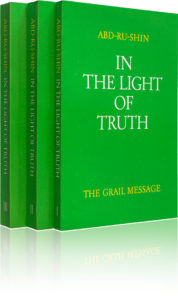
In his work “In the Light of Truth – The Grail Message”, Abd-ru-shin explains that the astral body is required as a link between the soul of a person and the physical body. This precedes the development of the earthly body, and it is again detached from the physical body by the soul upon its severance, thus at death, until the astral body, similar to the physical body, also finally disintegrates. Abd-ru-shin expressly points out that the astral body is not dependent on the physical body, but on the soul instead. That is why, for example, so-called “phantom pains” can still occur after the amputa- tion of a limb (see contribution “Goodbye, pain!” in this issue).
One can conclude in view of the “DNA theory” introduced above that, strictly speaking, the astral body is that “nonlocal” or “nonphysical” mediat- ing authority from which the DNA receives its information. This also seems logical in view of the unresolved question as to how the human body, in which all the molecules and atoms in the cells are replaced every fortnight, can nonetheless retain its shape and continuity. It seems to depend on a model or prototype – and this comes in the guise of the astral body.
The explanations set out in the work “In the Light of Truth” do lead to the conclusion that the artificial preserva- tion of a donor organ in the body of the recipient cannot forcibly bring about a connection to the conscious entity of the organ donor. Once the deceased donor then leaves his astral body behind permanently, there is no further possibility of contact with the one or more organs that once belonged to his earthly body.
It would appear to indicate that a deceased person who clings strongly to his physical body or to physical circumstances or experiences thereby also delays the weakening and disinte- gration of the astral body – making it continue to mediate impulses to the transplanted organs of his body.
In any case, all these interrelating phenomena should urge us once more to thoroughly reconsider the current practice of organ transplants. This ought to begin with the controversial criterion of “brain death”, which hopefully is again stirring very serious discussion, because we now have strong evidence supported by over 170 documented cases to demonstrate that brain death is not inevitably followed by a cessation of heartbeat and physical disintegration as a matter of course. Organ donors should there- fore be regarded as living persons. Besides, both the donor (on account of possible pain sensations during the retrieval) and the organ recipient (due to possible emotional problems and lifelong dependence on heavy medica- tions) should be informed as fully as possible of the possible impact of a transplant. The consent for an organ removal should be the personal responsibility of the one concerned alone (not of his relatives) – and every organ recipient should know of the donor and the circumstances under which the organ became available. For it is the only way to counteract undesirable influences and moral conflicts from the very outset.
This, combined with a new under- standing of life and death, would be the context in which transplants could take place with a good conscience.
Today, surgery, on the other hand, moves in a large grey zone which is ultimately unjustifiable. Phenomena such as “memory transplant” may be a cue for us to finally recognise that the notion of the body as a source of human spare parts, from which we can help ourselves without consequences, in order to do “good”, is an illusion.