Have a Grail World account?     Log In

Future of work

Issue Number: 
23


Austen Anizor


Participants at a conference were introducing themselves. Each person started with: “My name is ... and I work for ...” and then  mentioned his name and the organisation he worked for. At the end of the introductions, the master of ceremonies picked up the microphone and introduced himself thus: “My name is ... and I work for – money!”

A roar of laughter rolled through the hall. I was amused, too. In a quiet moment, however, I reflected on the matter again. The MC may have sounded amusing, but indeed he alone appeared to be right! Everyone may be working for one organisation or the other, but indeed most people are working for the money that organisation is paying. Therefore it sounded more logical for the average worker to say that he worked for money. Apart from the money the organisation is paying, why else should anyone be working? What does work mean to us as individuals?

Often we are not in harmony with our work, yet we are compelled to keep on working because, after all, we must earn a living somehow. Work can be seen as soulless drudgery or as an exciting joyful activity.


Historical perspective of work

The ancient Greeks and Romans saw work as demeaning, a distraction from ‘ideal pursuits’ in the arts, philosophy or in military exploits. Thus to the Greeks and Romans, only slaves were meant to work.

In pre-Reformation Christian Europe, work was regarded as a burden, a form of punishment. It was seen as the punishment for the sins of Adam and Eve, and the wages of sin was work! However, the collapse of the Roman Empire, the emergence of feudalism, the abolition of the slave trade as well as mechanisation of work were all important developments that helped to change this classical attitude to work. As a result of these changes, work became remunerated. This marked the beginning of paid employment.

In parts of Africa, work was traditionally regarded as an integral part of family life. Families would need to find some form of work to sustain themselves. A family would be skilled in some productive activity such as hunting, farming, fishing, ironwork, and so on. Working was a communal effort and was performed without the expectation of receiving a ‘wage’. Thus work helped to unite the people and develop their natural abilities and skills.

However, the European concept of work was introduced to Africa through colonisation. Even education became directed towards earning wages. In 1919, Lord Lugard, a pioneering British colonialist justified forced labour in Nigeria in this way: “... among primitive tribes, a measure of compulsion through their chiefs in order to obtain labour for railway construction and important works is justifiable as an education process to remove fear and suspicion.” It is doubtful if this system helped to remove fear and suspicion from the mind of the early African worker.

Throughout history, other peoples have wrestled with the concept of work. In ancient China, for example, the philosopher Mencius (372-289 BC) described a conceptual model of work known today as “production management”. He was the first to recognise the advantages of division of labour in that part of the world. Earlier, Plato (427-347 BC) wrote in ‘The Republic’: “A man whose work is confined to some limited task must necessarily excel at it.”

Adam Smith promoted the concept of division of labour as having the advantages of specialisation, skill development, and time efficiency. Ancient Greeks practised working in unison. Rhythmic war songs were developed in order to achieve a smooth, less fatiguing tempo and improve productivity. Roman soldiers were taught how to lay out their weapons and equipment in advance of any possible sudden and surprise attack.

As technology evolved, machines began replacing traditional manual labour. In time, machines began to be placed close to each other to facilitate the flow of work. As production improved, quantitative statistical analyses and operations research methods and systems were applied to enhance productivity. Today, production has moved from simple mechanisation to complete automation. Aided by Information and Communication Technology (ICT), human physical effort seems no longer necessary in a highly automated work environment. In general, the worker of today is systematically cut off from using his spiritual gifts, such as creativity, in his work.

Employers may claim that people are their most valued assets, yet in times of business downturn, people are the first to be eliminated. Andrew Mayo in his article ‘The Human Value of Enterprise’, states: “Our people are our most important asset.” This frequently repeated assertion by chief executives is often met with justifiable cynicism. People working in large organisations do not always experience the decisions and policies of management in a way that supports such an assertion. They are more likely to see first hand how their organisation is motivated exclusively by the drive for maximised efficiency at minimised costs, how people are effectively regarded as costs and treated accordingly.

Profit is the  sole purpose for which business organisations exist, and not for the spiritual advancement of humanity or other idealistic goals. The only thing that matters here is the “bottom line”! Tom Petzinger, in his article ‘Pioneering a Biotech Business Model for Managing’, states that “Management has much to learn about how matter and energy should naturally come together and flow – that having staff members come together and organise themselves is not only the “natural” thing to do, it may be the only organisation chart that will really work! Leaders should, as I see things now, work primarily on values and goals and let their work teams decide how to make things work in the most natural, productive, and profitable ways.”

In his article ‘Management in the 21st Century’, Tom Brown referred to the hundreds of management treatises, theories, management gurus, management ‘solutions’ (e.g. Theories X and Y, the Managerial Grid the Eight Principles of Excellence, Business Process Reengineering, and so on) as “all this management commotion”. Robert Heller and Tim Hindle in their book ‘Essential Manager’s Manual’ state: “A full understanding of what makes people perform well and of the problems that may affect performance in the workplace is therefore essential for any manager. He or she will need to employ a wide range of skills, both interpersonal and professional, in order to resolve these problems.”


The Spirituality of Work

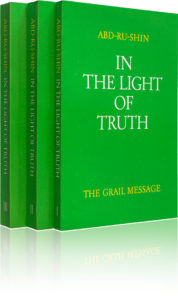
We exist on earth to engage in one activity or another, to do something useful. In the lecture “Duty and Loyalty”, the work, ‘In the Light of Truth - The Grail Message’ by Abd-ru-shin, states: “The performance of duty which voluntarily breaks forth radiantly from a human soul can never be confused with a duty carried out for the sake of earthly reward ... “

Referring to conditions prevalent today, the author continues: “... if a man only risks his life in the fulfilment of duty without conviction he thereby degrades himself to the position of a mercenary who, in the service of another, fights for the sake of money, [...] The idea of the fulfilment of duty remained, but the duties themselves were set up by the intellect and thus became earth-bound, piecework and imperfect. ... In performing his duty today a person often gives reliable service to someone whom he must inwardly despise. This, of course, cannot be described as loyalty, but remains merely the fulfilment of earthly duties which he has undertaken. It is purely an external affair, which in the reciprocal action can also bring nothing but outward benefit to the person concerned, be it improvement in his earthly means or earthly reputation.”

 In contrast, when employers and employees obey the Laws of Creation: “Thus, the fulfilment of duty would then always become an absolute pleasure and all work would become enjoyment, because all thinking and all working would be completely penetrated by true, God- willed love, and bring in its train not only an unshakable intuitive perception of justice but also loyalty, that loyalty which as a matter of course remains unchangeable in its essence, and does not consider this as a merit that must be rewarded.” (Volume III)

Unless business organisations redefine their mission, they will continue to attract workers who share the same inferior values, whereas those who subscribe to higher values will always have a “conflict of interest” with such work. This is in accordance with the Law of Attraction of Homogeneous Species. Thus our choice of work and employing organisation, and how we resonate with our work, can become good measures of how we stand spiritually. Of what use is it to engage in any work activity that has no spiritual value, especially as we spend the better part of our waking hours working? The performance of work should be based on a love for what we do, as well as respect for the employing organisation itself. Thus there will be a mutual exchange between ‘employers’ and ‘employees’, mutual appreciation and joyful gratitude for the opportunity granted to work together. That will be the future of work, but it will take a changed humanity to establish organisations that can provide opportunities for harmony through working together to support the fulfilment of human existence.