Dementia
What can we do?
Issue Number:
Television, Loneliness
and other Risks ...
New approaches to understanding Alzheimer's disease
and possibilities of prevention
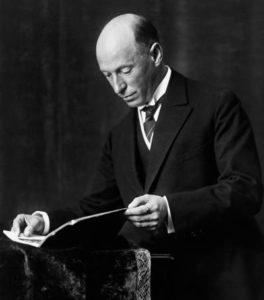
Professor Dieter Malchow
Alzheimer’s disease is one that, similar to a virus infection, afflicts more and more older people. Studies show also that caregiving partners of an affected person have a sixfold increased risk of developing Alzheimer’s themselves. Nevertheless, Alzheimer’s is not contagious, because non-family caregivers and doctors do not fall ill any sooner or in greater numbers than those not in direct contact with sufferers from the disease. It now seems that this disease may have something to do with our time and possibly with our behaviour patterns as well.
Is it possible to prevent Alzheimer’s disease? It might be! This is supported by the results of scientific studies of the very early stages of the disease and specific details from the life stories of those affected. Added to this are the results from statistical surveys on the question of which internal and external factors may increase the risk of developing the disease.
The cause should be sought in the inner essence of the human being, in his personality that we perceive as psyche or soul. In the studied cases the psyche was not up to the demands that arose out of the life situation in which the person found himself. In order to gain a better understanding of these relationships, a recent discovery from brain research is of central importance.
A special network
of nerve fibres
A few years ago research was conducted to determine how the brain behaves when we are at rest and the eyes are closed. It was expected that the brain would also be at rest, along with the nerve cells. Astonishingly, however, a network of nerve cells was found that was active in the resting state, but was turned off during tasks that required attention and concentration. That is the opposite of what is known from other networks. These are active when demands are made on us, such as when we read or write, for example, and they are switched off when the task is finished.
The scientists were therefore very curious to find out the purpose of this rest network, which behaved so unexpectedly. It was assumed that it was needed to weigh and consider questions that come from within, from our psyche.
To test this assumption, test subjects were asked to evaluate events that affect our moral attitude. Would one, for example, be willing to accept the death of one person if it means saving several other people? It was less a case of developing a personal stance, but rather a matter of dealing intensively with such moral questions. And lo and behold, in this task the rest network became active throughout and even beyond the state of rest.
In other words: the rest network is used to resolve emotional issues. This can easily be verified by closing one’s eyes, when one has the time to do so. Thoughts immediately come to mind that deal with current issues, with matters that are of inner concern to us. For example: ‘How do I find a new job soon?’ – ‘What present should I take along to the party?’ – ‘That was a great performance yesterday. The soprano was enthralling!’ – ‘Is such and such person finally getting better?’ – ‘How can I solve this problem?’
This network is instrumental in bringing past experiences to mind and assists us to resolve outstanding questions or to make important decisions. It also helps us to make plans for the future and to closely visualise our goals. But also – where others are concerned – it helps us to imagine how they feel, what motivates them.
But what does all of this have to do with Alzheimer’s? Studies have shown that this network is much less active than in healthy persons already during the very early stages of the disease, well before discernable problems with memory first surface. (2) This suggests that for whatever reason the emotional activity of the person concerned is impeded. Genetic predispositions may also handicap the brain’s functioning, but these affect barely one per cent of cases and will therefore not be included here. We therefore want to deal with the question of whether there are patterns of behaviour that tend to increase the risk of developing Alzheimer’s.
Risks of developing Alzheimer’s disease
It is hard to believe, but even watching TV for one hour per day may increase the risk of developing the disease by 30 per cent. (3) What disadvantage could television have?
What did we do before there was television? We talked about this and that, made plans for the next day, knitted or engaged in some handicraft or hobby, sang, played cards and read books. One disadvantage of TV could therefore be that it engenders a sedentary lifestyle, both physically and mentally. Too much TV could be aiding and abetting inner indolence.
Loneliness is another risk factor. It increases the risk of illness by as much as 60 per cent. Something can be done against loneliness and the psychological consequences arising therefrom. Although this may be more difficult for one person than for another, but following the inner urge to take interest in something new, such as going to the gym or joining a choir, thereby getting to meet other people, or by taking part in communal outings to get away from the daily grind or by learning a new language, will all jolt us out of our lethargy.
Thus isolation as well as the passiveness associated with watching television can paralyse one’s vigour. Both risk factors affect our emotional and mental activity.
Other factors include depression and stressful emotional states such as despair. This is presumably the reason why people caring for their affected partner run a higher risk of falling ill themselves. (4) This is because that type of care demands a great deal of mental strength and triggers psychological stress that often cannot be dissipated.
In another case, older members of the clergy were examined annually on their cognitive abilities. The participants were also tested for their tendency to suffer from despair, mental distress or great emotional turmoil. This study showed that people with a high predisposition to mental distress had twice the risk of developing Alzheimer’s than those with a low disposition. A high disposition led to a tenfold decrease in episodic memory retention than a low disposition. (5) This study shows the importance of remaining in a harmonious mental state.
In line with this result it was found with 678 catholic nuns (‘School Sisters of Notre Dame’ in Kentucky), who had undergone post mortem after their death, that their brains showed plaques typical of Alzheimer’s, although these sisters had demonstrated hardly any signs of the disease before their passing. One could assume that these sisters remained mentally and physically active into a ripe old age and, based on their trust in God, could more easily overcome mental anxieties.
One thesis therefore states that it is important for prevention not only to be physically active even in advanced years, but also inwardly astir by engaging in life in accordance with one’s vigour and possibilities and seeking a fulfilling task – one might also say by making oneself useful in some form.
What happens before the disease strikes?
Let us now consider the circumstances of some Alzheimer sufferers in order to verify the thesis.
Case 1: The father was a loner all his life, dominating, of patriarchal strictness, who had few or no hobbies other than reading the newspaper. He did not discuss, only issued orders, making his son afraid of him. Cynicism was one of his means to keep the people around him at a distance. He was transformed by dementia. The more the illness took hold, the more fragile his self-imposed isolation became. ‘Man, Berny, what would I do without you?’ he once said to his speechless son. He had never heard anything like that from his father before. The son confessed: ‘Now I have the father I have been looking for!’
Case 2: The mother was well organised and independent for a long time, but the father, however, was depressive and passive, leaving everything to the mother and totally dependent on her. Saddled with this burden, the mother never had the possibility to really express herself. The daughter suspects that her mother was carrying a great emotional pain inside her that she could not release. She suffered deep sorrow over so many things from her childhood. Later on, when dementia struck, the mother lost her inhibitions and told the father in no uncertain terms what she really thought of him.
Case 3: Before being afflicted with dementia, a housewife had been caring for her cancer-stricken husband for seven years, as well as doing the household chores for her aged mother who lived nearby. Within three months the husband and the mother both died. As a result, this woman, who was not very old, was suddenly deprived of what she saw as the purpose of her life, leaving an inner emptiness which she tried to hide as best she could. Nevertheless, she began to drink brandy regularly and fell into a deep depression. It was not until she was in the nursing home that she showed improvement. Although she was still suffering from dementia, she could help again and that made her happy.
Case 4: He was a married father of two sons, but considerably older than his wife. After retirement, he did not know what to do with himself although he was musically talented and interested in the arts. His wife was active in her occupation and took command much to his chagrin. He started drinking alcohol excessively, lost all impetus and finally showed signs of dementia.
Case 5: He was first a pastor, later on a university chaplain. He lived as an intellectual, tried to understand opposing views and was very active, working 15 hours a day. Later, after he had retired and his wife was still working, he developed a persecution complex. As a boy he had been forced to spy on a half-Jewish doctor by the Nazis, a neighbour and friend of his parents. But he had never been able to talk about it. His wife once painted him as a knight in armour, as a sign of how much he had closed himself off from his surroundings. He became very gloomy and despondent, presumably because dealing with the past was too stressful for him. He then painted frequently with a therapist, which helped him to keep the dementia somewhat at bay. But the traumatic memories of the war and the Nazi era, which tormented him terribly at night and about which he could not speak, could not be overcome by painting alone …
In all of these cases the inner life of the people concerned was seriously threatened for various reasons. In the first case the dominant father suppressed his finer emotions. In the second case the mother did not dare to express her emotional distress; it remained below the surface and prevented a harmonious emotional life from developing. In the third case the patient was suddenly without a purpose or task. Similarly placed is the fourth case, in which the adverse circumstances do not appear so obvious, but the parameters of mental stability are different with each person so that even a moderate disturbance can lead to catastrophic consequences for some. In the fifth case the unresolved emotional burden was too great for the one affected.
The importance of the
inner life
A happy, lively inner life is therefore a sound basis for maintaining health right into a ripe old age, while spiritual indolence, repression of emotional activity or unprocessed emotional baggage can favour the development of Alzheimer’s disease.
At first glance the outbreak of an illness often appears to be a random event. But we should not forget that every event is due to the working of the cosmic laws.
It was due to these laws that out of the initially disordered state of the universe the ordered world of the stars and galaxies emerged, just as the world of atomic nuclei, the periodic table of chemical elements as well as the ordered worlds of plants and animals bear witness to the working of these laws. Even in a tiny cell there is order down to the last detail, and every event is strictly regulated and monitored.
In the law of reciprocal action every application of force causes a subsequent reaction. The reception of a message stimulates in a nerve cell the release of neurotransmitter substances, which, in turn, set off further processes, including causing this cell to enlarge its reception apparatus to receive further nerve impulses.
Furthermore, the law of the attraction of homogeneous species is also active. It brings about a connection of what is similar or ‘fits together’, like lock and key, and what is dissimilar is repelled, finding no access like a key that does not fit a particular lock. Thus the neurotransmitter substance acetylcholine cannot bond to the adrenalin receptor and therefore can neither activate nor inhibit this cell. The acetylcholine has no access, and therefore no effect.
There are also the law of gravity and the law of movement. In the application of these laws or principles we find that those who wanted to blot out what happened in the past by keeping silent about it, have thereby also brought the areas in their brains where memories are stored to a standstill: disuse eventually leads in the reciprocal action to a dying of the cells. The brain areas in question are very soon metabolically undersupplied, which means they have been severly under-utilised.
If some people either through retirement or redundancy succumb to lethargy or inaction, then the drive for new plans for the future is too weak because it lacks inner movement or exertion. The brain areas needed for this purpose receive no impetus and therefore wither away and are unable to function as efficiently.
How do we prevent
the disease?
There are different approaches to prevention. Konrad Beyreuther, for example, a professor in Heidelberg, Germany, who has contributed much to the understanding of Alzheimer’s disease, practises balancing exercises and has muesli with linseed, wheat germ, sunflower seeds, pumpkin seeds and fruit for breakfast each morning. He also swallows a capsule of fish oil, ¼ aspirin, 0.5 mg of folic acid as well as an appropriate dosage of vitamin C, fluoride, magnesium and calcium tablets daily. He rides his bike to the laboratory and, as he himself says, is an optimist by nature. His mother had Alzheimer’s. Professor Beyreuther also advises to avoid emotional stress and to seek treatment for stressful emotional states as further measures to prevent the disease.
What he is doing is probably right. But not all human beings are alike. A Japanese man who celebrated his 106th birthday and is physically still rather fit said that he eats four eggs every morning. The well-known researcher in artificial intelligence, Ray Kurzweil, swallows 200 tablets every day, which are meant to support the physiological processes in his body. He is now over 50 years old and is as fit as a man of 40 years. The French and Italians usually eat only a light breakfast, the English and North Americans, however, a sizeable one. Which is right?
What is right and important is that everyone finds out himself what is good for him and what keeps him active. What is best in my opinion is to remain inwardly awake and alive, to be courageous and be willing, even in old age, to start something new. It would be harmful to be afraid or to conceal one’s fears. In cases of excessive mental strain and stress it is extremely important to seek competent help in good time to restore the emotional equilibrium.
The affected persons, whose life stories we looked at as examples, all had in some form secluded themselves or withdrawn for lack of drive. Access to their living core was totally closed off or severely restricted, contact with other people remained superficial, no longer reaching the soul, which alone could bring about true experience and heartiness.
The gradual disintegration of the brain represents the final stage of the disease. The onset of Alzheimer’s disease is most likely to have a psychological cause. The reasons for an insufficient activity of the soul can be very diversified:
1. Striving for earthly advantages favours the intellect and suppresses exertion of the soul.
2. Inner indolence and love of ease leave the field to the intellect and, as a consequence, the soul also withers away.
3. Mental anguish and emotional distress will lead to loss of impetus and harmony.
4. Ongoing psychological traumas may prove increasingly oppressive to the soul until it is no longer able to cope.
The soul, whose core is the human spirit, represents the actual human being. A quest for prevention should therefore not focus on physical aspects only, such as diet and exercise, but above all promote the harmonious cooperation between body and soul. This happens of its own accord as soon as the inner person is active and courageous and follows his longing for what is new and meaningful.
It is the task of the soul to take the lead in life and to determine the direction through its intuitive perceptions. When this task is made more difficult or even impossible, disharmony will result. Alzheimer’s disease can be a consequence of this disharmony.
Literature:
1) B. J. Harrison et al., Consistency and functional specialization in the default mode network, Proc. Natl. Acad. Sci. USA 105, 9781–89, 2008
2) M. D. Greicius et al., Default mode network activity distinguishes Alzheimer’s disease from healthy ageing: evidence from MRI, Proc. Natl. Acad. Sci. USA 101, 4637–42, 2004
3) L. Fratiglioni et al., Influence of social network on occurrence of dementia: a community-based longitudinal study, The Lancet 355, 1315–19, 2000
4) R. Friebe, Is Alzheimer contagious?, FAZ 23.5.2010
5) R. S. Wilson et al., Proneness to psychological distress is associated with risk of Alzheimer’s disease, Neurology 61, 1479–85, 2003